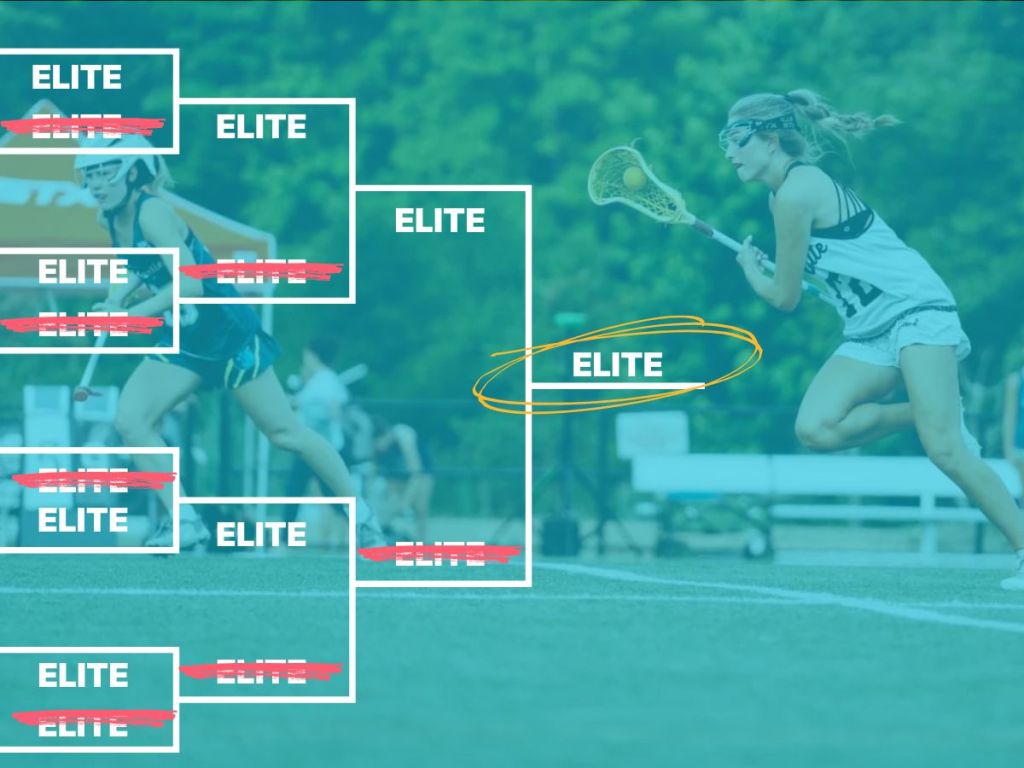
“ELITE” used to mean something.
Defined as “the best or most skilled members of a group,” the term was once reserved for programs that consistently separated themselves — not through branding, social graphics, or expensive travel schedules, but through actual results.
Elite teams produced college athletes at a high level.
They competed in the toughest brackets.
They sought out the best competition, even when it meant taking losses along the way.
And most importantly, they elevated the level of play around them.
Now? The label gets handed out so freely that it has become harder and harder to define what elite actually is.
The same thing has happened with the word “National.”
Traditionally, a national team implied geographic diversity — athletes coming together from multiple regions to form one of the strongest possible rosters. Somewhere along the way, though, clubs decided “National” could also mean “we occasionally get on a plane.”
And to be clear — none of this means regional clubs are bad.
There is absolutely a place for strong local and regional programs. The sport needs them. Most athletes should prioritize development, playing time, coaching fit, confidence, and honestly just enjoying lacrosse long before worrying about whether their hoodie says “Elite.”
But words are still supposed to mean things.
Not every travel team is national.
Not every good regional club is elite.
And paying thousands of dollars to play middle-tier brackets three states away does not magically change that.
To be clear, in SoCal there are currently only two girls programs that consistently meet the modern standard of both “elite” and “national”:
Mad Dog West Elite
Alliance National
Those programs consistently produce the bulk of the region’s high-end NCAA commits, All-Conference athletes, and nationally competitive teams. More importantly, they compete where actual elite teams compete: the top brackets, against the best clubs in the country, every single season.
That does not mean other clubs cannot develop players. Plenty do.
But there is a difference between a good regional program and a true national-level club. Somewhere along the way, the sport stopped being comfortable admitting that.
So with that in mind…
## Tier 1 : Elite / National
Mad Dog West Elite — Established Elite
At the highest level of girls club lacrosse in SoCal, Mad Dog West Elite has earned the label.
The program has produced double-digit Division I commits in each of the last 5 classes, including athletes headed to top-15 NCAA programs. Their teams compete in the highest brackets at major recruiting events and consistently place athletes into college lacrosse at every level.
More importantly, they seek out top competition rather than avoiding it — which remains one of the clearest markers of a truly elite program.
Alliance National — Legitimate National Program
Despite being newer to the landscape, Alliance National has quickly established itself as a legitimate national-level club.
Their rosters pull athletes from multiple regions including California, Arizona, Utah, Canada, Florida, and the Northeast, matching the traditional meaning of a “national” team more closely than most programs using the label today.
Like Mad Dog West Elite, they compete in elite brackets and have already produced impressive recruiting results in the 2026 and 2027 classes.
## Tier 2 : Regional “Elite”
Outlaw Elite — Aspirational
Outlaw deserves some credit for at least attempting to position its athletes in stronger recruiting environments. They travel to quality events and have produced some early NCAA commits.
That said, they are not quite operating at a true “elite” level yet.
Their teams typically compete in middle-tier brackets rather than against the very top clubs nationally, which limits both exposure and meaningful high-level evaluation. They also still struggle to field fully age-pure rosters — another marker that separates established elite programs from emerging ones.
Right now, Outlaw feels more like an aspiring elite program than an established one.
LA Select — Regional Program
When LA Select first emerged, the branding fit. They consistently developed solid players and occasionally produced high-end Division I talent alongside strong DII and DIII recruiting classes.
Lately, though, the structure has become harder to define. Some teams are combined with outside programs, some age groups are merged together, and the overall direction feels less like a singular elite pipeline and more like a collection of regional rosters trying to stay competitive.
Mad Dog Pacific Elite — Rising Tier
Unlike many clubs in this tier, they do pull athletes from multiple areas of Southern California, attend strong recruiting events, and have already begun producing legitimate NCAA commits in both the 2026 and 2027 classes.
The hesitation comes from competition level. While Pacific attends quality events, they are not consistently competing in the top brackets against the nation’s premier clubs the way West Elite and Alliance National are.
Still, the infrastructure matters. The Mad Dog brand, regional pipeline, and academy development system give Pacific a foundation that many other emerging clubs simply do not have.
If any Tier 2 program is positioned to make a jump over the next few years, this is probably the one.
DCC National — Regional Team, National Label
This is probably the clearest example of how loosely the word “National” gets used today.
Despite the branding, the roster is overwhelmingly local — primarily drawing from a concentrated group of San Diego-area programs and high schools. That does not make the team bad. They have produced a few college athletes and clearly provide opportunities for players in the region.
But “National” traditionally implies either geographic diversity or competition at the very highest national level. Right now, DCC functions much more like a strong regional travel program than a true national club.
The bigger issue is competitive positioning. Elite programs usually seek out the hardest path available. Playing down divisions may help records and Instagram graphics, but it does not necessarily accelerate long-term player development or recruiting visibility.
Frenzy National / Elite — Branding Over Definition
Frenzy may have the most ambitious naming structure in the region, fielding both “Elite” and “National” designations within the same system.
The problem is that neither label fully aligns with how the teams actually operate.
Their “Elite” teams largely stay within regional competition structures, while the “National” teams remain heavily localized from a roster standpoint. Attending one East Coast tournament alone does not create a national-level program.
Again, none of this means the club lacks value. There is absolutely a place for regional development programs, and many athletes benefit from them. But the terminology being used suggests a level of competition and exposure that the current structure does not consistently support.
## Tier 3 : Regional Programs
Mad Dog Regional
Frenzy Regional
LIVIN
True San Diego
Top Ched
Scream
Rockslide MOB
… and more every day
All of these programs serve a purpose.
Some are development-focused. Some prioritize local community. Some provide a more affordable or realistic path for multi-sport athletes. Some simply offer players a place to continue competing with friends they enjoy playing with.
That matters too.
Not every athlete needs a national schedule. Not every player wants the pressure or financial commitment that comes with high-end recruiting circuits. And honestly, youth sports could probably benefit from a little less obsession with branding and a little more honesty about fit.
At the end of the day, development matters more than labels.
But labels still matter some.
Otherwise everyone is elite… and if everyone is elite, nobody is.


Leave a Reply